Retention Is the Signal Most Creators Ignore
2026-07-14
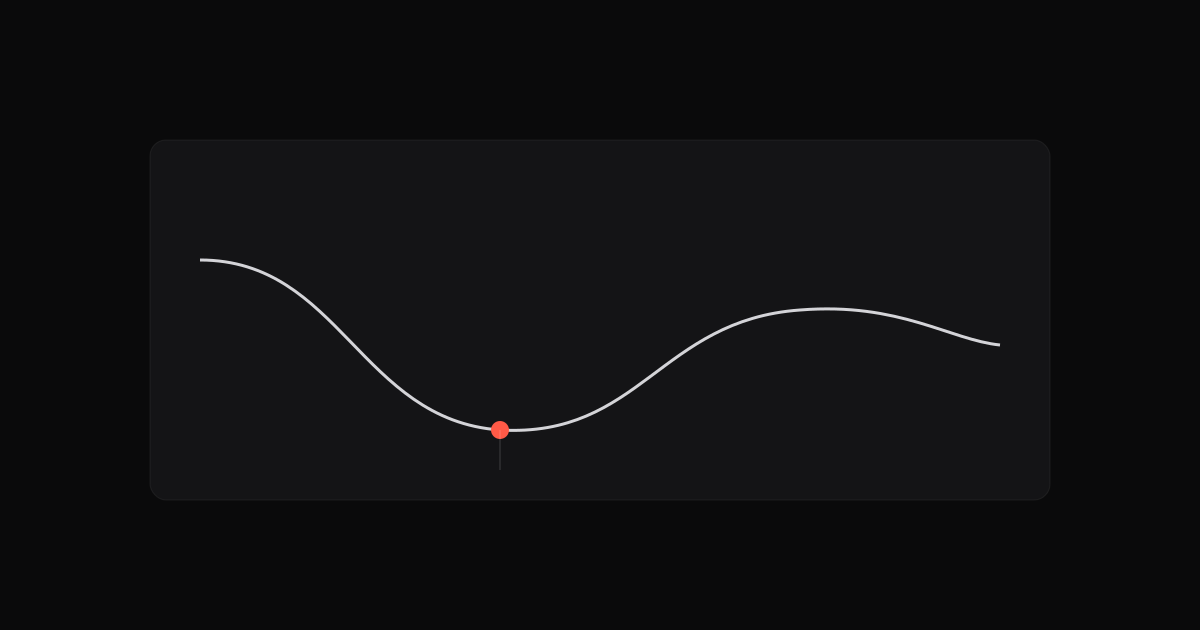
Two videos can post the same view count and mean completely different things. One held its audience most of the way through. The other lost half of them in the first minute and recovered on the back of a strong recommendation push. From the outside, both look like a win.
Retention is what tells them apart. It's the curve, not the total, and it's the part of a channel's data most creators check last, if they check it at all.
What a drop actually says
A retention curve isn't a single grade, it's a shape, and the shape is where the information lives. A steady decline across a video is normal: some audience always drifts off. A sharp drop at one specific point is different. That's a moment where something specific happened: a slow intro, a topic change the audience didn't want, an ad break that landed wrong.
Finding that point turns a vague feeling ("this one didn't land") into a specific, fixable observation ("the audience left right after the intro"). That's a much more useful thing to carry into the next video.
Why it's private, and why that matters
Retention data belongs to the creator's own channel. It comes from YouTube Analytics, not from anything visible on the public video page, which is why it's a signal only the creator (or a tool they've connected their own account to) can see. Public numbers like views and likes are useful for comparing across channels, but retention is the one place a creator can look at their own patterns without anyone else's noise mixed in.
That combination, a creator's own retention pattern read alongside what public competitor videos are doing, is a more complete picture than either one gives alone.
If you want to see your own retention pattern laid out against your chosen competitors, join the VidsRank waitlist.